Juicy Blueberry – A Business-First Embroidery Design Review
As an embroidery designer who has spent years digitizing, testing, and stitching thousands of machine embroidery design files, I know that a pretty subject doesn’t always translate into a reliable finished product. When I first reviewed Juicy Blueberry for potential small business merch use, I was immediately struck by its commercial viability. This isn’t just a cute fruit graphic; it’s a versatile embroidery file built with the decorator and brand owner in mind. The optional Box Stitch and the ability to skip the outer box color make it a standout design asset for anyone producing custom apparel, embroidered patches, or branded merchandise. Let’s break down exactly how this design performs in the real world of commercial embroidery.
Why Juicy Blueberry Works for Small Business Identity
First impressions matter, and Juicy Blueberry delivers a visual personality that is both professional and approachable. It strikes a rare balance between being playful enough for a handmade product brand and polished enough for a boutique café or retail uniform. The design feels fresh, organic, and premium—qualities that directly influence brand identity and customer trust. When a customer sees a beautifully stitched blueberry on a staff apron or a tote bag design, they immediately associate your brand with quality and attention to detail.
One of the most important aspects of brand identity is consistency across all touchpoints. Juicy Blueberry allows you to maintain that consistency whether you are stitching it on a work shirt, a cap, or a product label. The design doesn’t rely on trendy gimmicks that will look dated next season. Instead, it offers a classic, rustic charm that feels timeless. This is exactly what you want when investing in commercial embroidery for your business.
The Power of the Optional Box Stitch
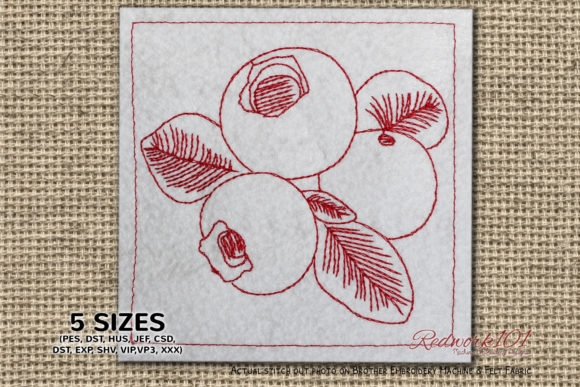
The product description explicitly states that “The Box Stitch shown in picture is optional. The color of outer Box is different color in most of the designs unless it is part of the design itself, you can skip the color directly in.” This is a critical feature for production efficiency. As a decorator, having the ability to remove the outer box or change its thread colors without re-digitizing the entire embroidery file saves time and reduces stitch density. For a small business, this means you can use the same digital embroidery file for a structured, badge-like embroidered patch and a softer, standalone logo for an apron. The flexibility built into this single file is a huge advantage for any apparel decorator.
Real-World Applications for Branded Merchandise
Imagine a local café, bakery, or handmade jam brand wanting to elevate their merchandise. Juicy Blueberry is a natural fit for the Food category, but its appeal extends to any business that wants to convey freshness and authenticity. Here are the specific placements where this design excels:
- Apron Embroidery: This is the most obvious and powerful use. A medium-sized Juicy Blueberry on a canvas apron adds instant visual appeal. It turns a basic uniform into a statement piece that customers remember.
- Cap Embroidery: For staff uniforms, a cap front is prime real estate. Because the outer box can be skipped, you can reduce the stitch density to prevent puckering on the curved crown. This makes the design much more reliable for cap embroidery than many dense, highly detailed files.
- Embroidered Patches: The optional box stitch makes this design a perfect candidate for embroidered patches. You can stitch a run of patches with the box for a structured look, and another run without it for a more organic feel. This is ideal for small business merch sold in a retail space or online.
- Tote Bag Design: Tote bags are a staple of brand identity for eco-friendly and handmade brands. A Juicy Blueberry stitched on a natural cotton tote becomes a walking advertisement that feels premium, not promotional.
- Product Labels & Packaging: For a handmade product like soap, candles, or preserves, a small embroidered patch or direct stitch on a fabric label adds a tactile, luxury element that justifies a higher price point.
Critical Production Considerations for Decorators
No design review is complete without an honest look at the technical constraints. Juicy Blueberry is versatile, but it demands respect for the fundamentals of machine embroidery. If you are an embroidery shop or a small business owner stitching in-house, here is what you need to check before production:
- Stitch Density & Fabric Texture: Always inspect the stitch density in your software. If the design has a high density, be cautious on plush fabrics like terry cloth or thick fleece. Use a proper stabilizer—cut-away for knits, tear-away for stable wovens.
- Hoop Size & Scaling: Confirm the hoop size required for the digital embroidery file you purchase. If you plan to use it as a small patch size on a cap or sleeve, test it first. Ensure the details of the blueberry and leaves remain clear when scaled down.
- Thread Colors & Contrast: The “Juicy” aspect of the design likely relies on nice color gradients or highlights. Lay out your thread colors against the actual base fabric to ensure sufficient contrast. Dark uniforms may require a lighter thread palette to make the design pop.
- Wash Testing: For items like aprons and staff uniforms that see frequent washing, run a test stitch-out and wash it. Check for broken threads or fraying edges. A well-digitized file should hold up, but the fabric texture and stabilizer choice play a huge role.
Critical Checkpoints Before Production
Before you commit to a large run of custom apparel, follow these steps to protect your investment:
- Test in Black and White: Convert the design to a single color and stitch it out. This reveals any spacing issues or weak points in the digitizing.
- Check Commercial Licensing: Just because you bought the file doesn’t mean you automatically have the right to sell the finished product. Confirm the commercial embroidery licensing terms explicitly.
- Create a Printable Mockup: Use a printable mockup to show the client exactly where the design will sit. This is a must for small business merch projects to avoid costly misunderstandings.
- Review the Outer Box Color: Since the description notes that the box color is separate, make sure you or your client specifies whether it should be included, skipped, or color-matched to the brand palette.
Protecting Your Brand Investment
When you invest in commercial embroidery, you are investing in the perception of your brand. A poorly stitched design can actually damage brand identity and customer trust. Juicy Blueberry gives you a strong foundation, but the execution is everything. Use a high-quality stabilizer, test on the actual fabric texture, and never compromise on thread quality. The goal is a finished product that looks like it belongs in a high-end boutique, regardless of whether you are a bakery, a florist, or a pet brand. This design has the potential to be a consistent element across all your design assets, from your storefront signage to your staff uniforms and customer merchandise.
For Etsy sellers and handmade product creators, this design is a fantastic way to add a professional touch that sets you apart from competitors. A handmade product paired with a beautifully stitched label feels like a gift, not just a purchase. It builds the kind of emotional connection that leads to repeat customers and word-of-mouth referrals.
Final Verdict: A Business-Ready Design Asset
Juicy Blueberry is more than just an attractive machine embroidery design. It is a practical, business-ready tool for anyone serious about small business merch, brand identity, and custom apparel. The optional box stitch and the ability to skip the outer color give it a level of flexibility that is rare in the Food category. Whether you are an embroidery shop looking to expand your catalog, a café owner wanting to elevate your staff uniforms, or a handmade brand adding a premium touch to your packaging, this embroidery file delivers real value. Just remember to test thoroughly, respect the limitations of your fabric texture and stitch density, and always prioritize quality control. Your customers will notice the difference.