Boy Holding Pichkari Redwork: A Designer's Review
As an embroidery designer who has prepped countless collections for craft fairs, handmade markets, and Etsy drops, I have learned to judge a design by more than just its preview image. I look for stitch flow, thread contrast, scaling flexibility, and—most importantly—whether it will stop a customer mid-stride at a booth. Recently, I spent time reviewing Boy Holding Pichkari Redwork, a machine embroidery design that caught my attention for its festive character and clean redwork style. Let me walk you through my honest assessment from the perspective of someone who has stitched, displayed, and sold hundreds of embroidered products.
First Impression: Festive, Bold, and Culturally Distinct
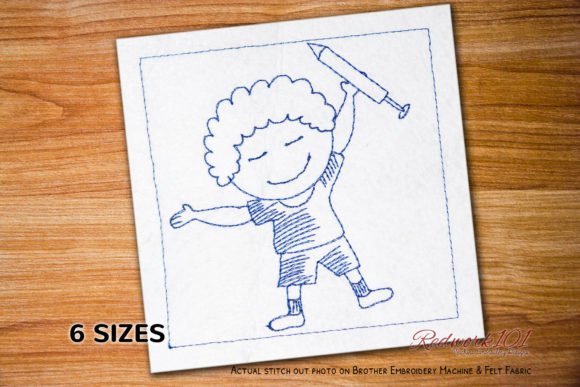
The moment I opened Boy Holding Pichkari Redwork, I noticed its strong visual identity. The design features a young boy holding a pichkari—a traditional hand-operated water pump often associated with Holi celebrations. The redwork style gives it a clean, uniform look that feels both playful and decorative. It is not a farmhouse or rustic piece; it is festive, cultural, and full of energy. The single-color redwork approach makes it feel cohesive and easy to produce, while the subject matter stands out in a sea of generic floral and monogram designs.
For a craft fair booth, this design has immediate stopping power. Customers browsing tote bags, aprons, or tea towels will notice the unique motif. It is not something they see every weekend, and that novelty is a serious advantage for handmade sellers looking to differentiate their product line. The design feels premium in its simplicity, and the redwork technique adds a hand-stitched, heritage quality that many buyers appreciate.
How Boy Holding Pichkari Redwork Performs on Different Products
I tested this design mentally across several product categories that I typically bring to markets. Here is how it performs on each:
Tote Bags and Market Bags
This is where Boy Holding Pichkari Redwork truly shines. Centered on a cotton or canvas tote, the design becomes a conversation piece. The redwork reads clearly from a few feet away, which is critical for booth display. I would recommend hooping a medium-sized tote bag with a tear-away stabilizer and testing the stitch density on a scrap piece first. The design works well as a focal point, and the optional box stitch mentioned in the description can add a nice framed effect—though I would test it first to ensure the outer box color complements your bag color.
Aprons and Kitchen Towels
An apron embroidered with this design feels functional and festive. For a craft fair, an apron with a unique cultural motif can attract buyers looking for something beyond the usual "Kiss the Cook" or floral patterns. On tea towels, I would use a smaller scale version if possible. The redwork style holds up well on textured fabric, but be mindful of dense stitch areas. Towels with a loose weave may require a water-soluble stabilizer on top to prevent the stitches from sinking.
Embroidered Patches
Patches are a low-risk, high-margin product for any embroidery business. Boy Holding Pichkari Redwork would make a striking iron-on patch, especially for jackets, backpacks, or festival bags. The design is cohesive enough to work at patch size, provided the details remain clear. I would test a small stitch-out to confirm that the pichkari and facial features do not lose definition. If the design is originally digitized for a 5x7 hoop, scaling down may require adjusting stitch density.
Caps and Curved Surfaces
This design will work on a cap if you use a proper cap hoop and a medium-weight stabilizer. However, the redwork style relies on clean lines, and curved surfaces can distort the shape if not hooped carefully. I would recommend testing on a practice cap before committing to a batch. The design is not overly dense, which helps it conform to the curve without buckling.
Pillow Covers and Fabric Pouches
For home decor, a pillow cover with Boy Holding Pichkari Redwork adds a festive accent to a sofa or bed. The redwork stitching looks elegant on a neutral linen or cotton background. Small pouches, like cosmetic bags or gift pouches, can also carry this design well. It gives the product a handmade, artisanal feel that resonates with boutique shoppers.
Practical Selling and Production Points
When I evaluate a design for commercial embroidery, I consider how easily it translates into finished products that sell. Here are my key observations for Boy Holding Pichkari Redwork:
- Visual clarity at a glance: The design is easy to understand from a distance. The boy and the pichkari are distinct, and the redwork style eliminates color confusion. Customers at a craft fair will immediately grasp the theme.
- Photography for online listings: This design photographs well because the red thread contrasts nicely against light fabrics. For Etsy sellers, a clean mockup on a tote bag or apron will look professional. I recommend using natural light to capture the texture of the stitches.
- Batch production repeatability: Since the design uses a single primary thread color (red), you can stitch multiple units without changing threads frequently. This speeds up production for market prep. The optional box stitch adds a second color, but you can skip it to keep production lean.
- Booth display strength: A row of tote bags with this design will create a cohesive, eye-catching display. The redwork stands out against most booth backdrops, especially if you use neutral tablecloths and simple signage.
Careful-Use Notes for Embroidery Entrepreneurs
Every design has its quirks. Here are the points I flagged while reviewing Boy Holding Pichkari Redwork:
- Dense stitch areas: Redwork typically uses satin stitches and running stitches, which are not overly dense. But if the design includes fills in the pichkari or the boy's outfit, test for puckering on lightweight fabric. Use a cut-away stabilizer for stretchy or loose-weave materials.
- Tiny details: The boy's face and the pichkari handle may have small elements. If you scale the design down, these details could become muddled. Always test at the intended size before production.
- Dark fabric: Red thread on dark fabric can be lower contrast. If you plan to embroider on black or navy, consider using a brighter red or a light underlay to ensure the design pops. A white or cream fabric will give the cleanest redwork look.
- Textured towels: Terry cloth or waffle weave towels can absorb stitches unevenly. Use a topping stabilizer and reduce the stitch density slightly if the design allows. Test a sample before committing to a bulk order.
- Curved cap surfaces: As mentioned earlier, caps require careful hooping. The design may need minor adjustments to sit properly on a curved surface. Work with a digitizer who understands cap embroidery if you plan to scale this design for headwear.
Visual Appeal and Customer Engagement
In my experience, customers at craft fairs respond to designs that tell a story or evoke a memory. Boy Holding Pichkari Redwork does exactly that. The pichkari is a recognizable symbol of Holi, and the boy's posture suggests joyful play. This emotional connection can drive sales, especially if you position the product as a festive gift or a cultural keepsake.
The design also adds perceived value. A plain tote bag might sell for $12, but an embroidered version with a distinctive motif can command $20 or more. The redwork style looks intentional and crafted, not like a mass-produced transfer. Buyers appreciate the handmade quality, and the design's uniqueness justifies a premium price point.
For brand consistency, this design fits well within a South Asian or festive-themed collection. If you already sell products with other cultural motifs, Boy Holding Pichkari Redwork will complement your lineup. The redwork palette also makes it easy to pair with other designs in your booth without clashing.
Practical Embroidery Designer Notes
Before you stitch this design for sale, I recommend the following steps:
- Test on scrap fabric: Always run a test stitch-out on fabric similar to your final product. Check the stitch density, thread tension, and overall clarity. Adjust if needed.
- Check thread contrast: The red thread should stand out against your chosen fabric. Test on a swatch under the same lighting you will use at your booth.
- Review spacing and hoop size: Confirm the design fits within your hoop. The description mentions the box stitch is optional, so decide whether to include it based on your product layout. If you skip the box, the design may need additional spacing or centering.
- Inspect stitch density: Redwork designs are usually moderate in density, but inspect the file for any areas where stitches overlap excessively. This can cause fabric puckering or thread breaks.
- Use the right stabilizer: For most woven fabrics, a medium-weight cut-away stabilizer works well. For towels or knits, use a tear-away with a topping layer. Always match the stabilizer to the fabric.
- Create at least one real mockup: Stitch the design on an actual product, not just a scrap piece. Photograph it for your Etsy listing and display it at your booth. Customers respond better to real samples than to digital renders.
- Compare fabric colors: The design will look different on cream, white, light gray, or pastel fabrics. Choose a background that makes the red thread pop without overwhelming the design.
- Confirm commercial licensing: Before selling finished products, verify that the Boy Holding Pichkari Redwork embroidery file includes a commercial use license. If you are unsure, contact the designer or distributor. This step is critical for any small shop product.
Final Thoughts on Boy Holding Pichkari Redwork for Craft Fair Sellers
After reviewing this design, I can confidently say that Boy Holding Pichkari Redwork is a strong addition to any handmade product lineup. It is festive, culturally distinct, and visually clean. The redwork technique makes it practical for batch production, and the subject matter gives it a unique selling point that stands out in the crowded craft fair market. Whether you stitch it on tote bags, aprons, patches, or pillow covers, this design has the potential to attract buyers who are looking for something beyond the ordinary.
For Etsy sellers and small shop owners, this design offers a clear path to a premium finished product. The optional box stitch gives you flexibility, and the single-color palette simplifies production. As always, test thoroughly, stabilize properly, and display your work with pride. Boy Holding Pichkari Redwork deserves a spot in your booth—and I think your customers will agree.