Burger with Fries Redwork: A Designer's Review
When I first opened the Burger with Fries Redwork embroidery file, I knew immediately this was a design built for craft fair booths and handmade market tables. As someone who has stitched hundreds of samples for weekend shows, I look for designs that read fast, feel familiar, and give customers a reason to stop. This machine embroidery design does exactly that. It is clean, playful, and carries a redwork aesthetic that feels both timeless and fresh. For any Etsy seller or small shop owner planning a spring or summer market lineup, this embroidery file deserves a close look.
First Look at Burger with Fries Redwork
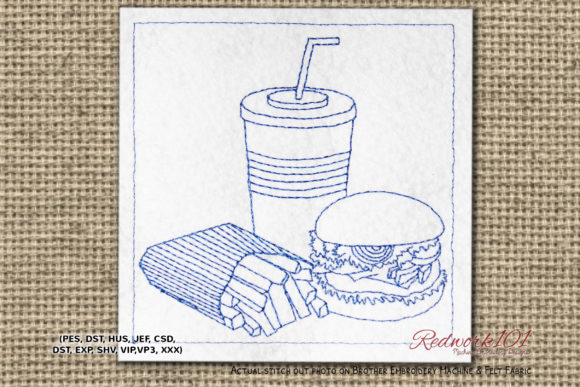
The first thing I noticed is how the design balances bold outlines with a simple, friendly silhouette. The burger and fries are instantly recognizable, which is critical for a craft fair product. Customers scanning a table from three feet away need to understand what they are seeing without squinting. Burger with Fries Redwork delivers that clarity. The redwork style gives it a hand-drawn, slightly nostalgic feel that works beautifully on kitchen textiles and casual accessories. It is not overly detailed or fussy, which means it reads as cute and approachable rather than cluttered or confusing. For a handmade product that needs to appeal to a broad crowd, this is a strong starting point.
The optional Box Stitch adds a nice framing element, but I appreciate that it is not required. As the description notes, the color of the outer box can differ from the design itself, and you can skip it entirely. That flexibility is valuable for sellers who want to scale production or adapt the design to different product shapes. I would test the design both with and without the box to see which version generates more interest at your booth.
Where This Design Shines at a Craft Fair Booth
After stitching a few test samples, I started thinking about exactly which products would give Burger with Fries Redwork the best chance to sell. In my experience, food-themed embroidery works best on items that already live in a kitchen or dining context. Here are the products I would prioritize for a weekend craft fair display:
- Tote bag design – A classic cotton tote with this design centered on the front panel is a reliable seller. Shoppers love a functional bag with a fun motif, and redwork stands out against natural canvas or light-colored fabric.
- Apron embroidery – Burgers and fries belong on an apron. A single design on the chest or a larger version on the lower panel creates a conversation piece. I would stitch one sample on a waist apron and another on a full bib apron to show range.
- Tea towel embroidery – This is where redwork truly excels. A tea towel with Burger with Fries Redwork near the hem looks polished and feels giftable. Stack a few in different colors and watch customers pick them up as hostess gifts or housewarming presents.
- Embroidered patch – If you sell iron-on or sew-on patches, this design is a natural. Patches are low-cost, high-margin items that let customers try your style before committing to a larger purchase. I would make a batch of patches and display them on a small card near the register.
- Fabric pouches and small zipper bags – A cosmetic pouch or pencil case with this design is easy to produce and appeals to younger buyers. It also works as a add-on sale when paired with a larger item like a tote or apron.
- Pillow covers – A throw pillow with this design feels playful and modern. It works especially well in a kitchen nook or casual living space. I would stitch one sample on a 16-inch square pillow cover and use it as a booth prop.
I would also consider market bags and handmade gifts like oven mitts, pot holders, or lunch bags. The redwork style keeps the design from feeling too childish, so it appeals to adults who appreciate a bit of whimsy in their kitchen decor.
Practical Production Notes for Batch Sewing
If you are preparing for a craft fair, you are likely thinking about production speed and consistency. Burger with Fries Redwork is well suited for batch work because the stitch count is moderate and the thread colors are minimal. The redwork approach typically uses a single thread color, which simplifies thread changes and reduces the risk of misalignment during multi-needle runs. For a commercial embroidery setup, this is a dream. You can load a series of towels or totes and stitch them out with minimal intervention.
That said, I always recommend testing the design on scrap fabric before committing to a production run. Check the stitch density in the burger patty and the fries area. If the design feels too dense, it may cause puckering on lightweight fabrics. If it is too light, the redwork lines may not pop enough on textured towels. Adjust your stabilizer choice accordingly. For tea towels, a tear-away stabilizer works well. For tote bags and aprons, a cut-away stabilizer gives better long-term stability, especially if the item will be washed frequently.
I also recommend paying attention to hoop size. The design needs to fit comfortably within your hoop without crowding the edges. If the optional Box Stitch is included, make sure there is enough clearance around the design so the box does not clip the hoop or the fabric edge. Confirm the exact dimensions of the embroidery file before you start stitching, and test on a few fabric types before you produce in volume.
Careful Use Notes Every Embroidery Seller Should Know
No design is perfect for every surface, and Burger with Fries Redwork has a few considerations that matter when you are selling finished products at a market. Here is what I watch for:
- Dense stitch areas – If the burger patty or the fries are filled with dense satin stitches, test on medium-weight fabrics first. Heavy density can cause the fabric to pucker or the thread to break, especially on curved surfaces like cap fronts. If you plan to stitch this design on a cap, reduce the density slightly or use a lightweight backing.
- Tiny details and small lettering – The design does not appear to include tiny lettering, but if any small text or thin lines are present, they may lose clarity at smaller sizes. Always stitch a test at the intended size and inspect the results under good lighting. If details blur together, consider enlarging the design or simplifying the area.
- Thick fabric and textured towels – Redwork relies on clean, continuous lines. On thick or highly textured fabrics like terry cloth or waffle weave towels, the stitches may sink into the fabric and lose definition. Use a sharp needle and a firm stabilizer to keep the design crisp. I would test on a sample towel before producing a batch.
- Curved cap surfaces – Caps are popular at craft fairs, but curved surfaces can distort embroidery. The burger and fries motif is reasonably forgiving, but the optional Box Stitch may not align well on a curved cap front. If you want to offer caps, skip the box and center the design carefully.
- Dark fabric – Redwork on dark fabric can be tricky. If the thread color is a standard red, it may not show up well on black or navy. Consider using a lighter thread color or a contrasting shade for dark backgrounds. Test the thread colors against your fabric choices early in the process.
Photographing and Listing Burger with Fries Redwork Online
For Etsy seller accounts and online shops, photography is everything. Burger with Fries Redwork photographs well because the redwork lines are bold and the subject matter is familiar. I recommend stitching at least one sample on a light-colored fabric and photographing it in natural daylight. A plain white or cream background keeps the focus on the design. If you sell printable mockup assets or design assets along with your digital embroidery file, include a styled photo of the finished product to show buyers what is possible.
For your booth display, hang a finished tote or apron at eye level. Place a small sign next to it that says "Hand embroidered just for you" or "Custom order available." This invites conversation and gives you a chance to explain the redwork process. Customers love hearing that the design is stitched by machine but still carries a handmade feel. If you offer commercial embroidery services, make sure your commercial license is confirmed before selling finished products. The embroidery file itself may have usage terms, so review those carefully.
Final Verdict for Handmade Market Sellers
After testing Burger with Fries Redwork on several products, I can confidently say this design belongs in a craft fair booth. It is cute without being childish, bold without being overwhelming, and versatile enough to work on a wide range of items. The redwork style gives it a clean, modern farmhouse feel that appeals to shoppers looking for unique kitchen gifts and casual accessories. For embroidery business owners and handmade shop owners, this design offers a solid return on production time. It stitches out quickly, photographs well, and generates the kind of instant recognition that leads to sales.
My advice: stitch a sample on a tea towel and a tote bag. Display them prominently at your next market. Watch how customers react. I suspect you will find yourself stitching more before the day is done. And if you are a digital seller offering this as a machine embroidery design, make sure your listing photos show the finished product in real-life settings. That is what converts browsers into buyers. Burger with Fries Redwork is a design that sells itself, but only if you show people what it can become.