Apricot Fruits with Sliced Redwork: A Designer's Review
When I first opened the Apricot Fruits with Sliced Redwork machine embroidery design, I felt a sense of calm. The subject matter is familiar, but the execution brings something fresh. Apricots carry a soft, warm, almost nostalgic feel. The sliced redwork technique adds a hand-drawn quality that stands out from standard fill stitch fruit designs. I have tested hundreds of embroidery projects, and this one immediately felt like it belonged on a kitchen towel, an apron, or a handmade gift for a food lover. It is not a loud design. It does not scream for attention. Instead, it invites the viewer to look closer.
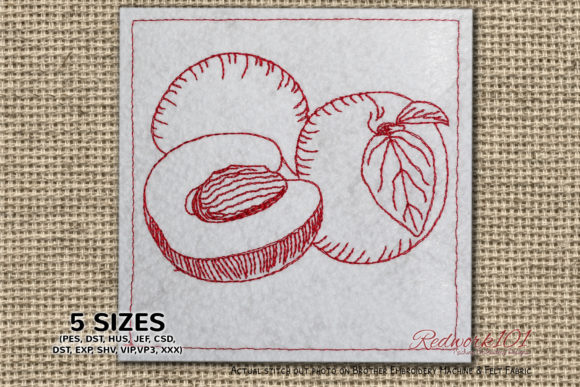
The Food category often gets crowded with overly detailed designs that lose clarity at smaller sizes. This design avoids that trap. The apricot shapes are readable, the sliced detail is distinct, and the redwork lines give it a sketch-like charm. The optional box stitch around the design adds structure, but I personally prefer it without the box for a more organic look. The choice to skip that outer color is fully yours, and the design holds up either way.
First Impressions and Visual Personality
The mood of Apricot Fruits with Sliced Redwork is gentle, rustic, and slightly vintage. It reminds me of farmhouse kitchen decor or a hand-stitched recipe card. The apricot colors are warm without being overly saturated, and the redwork lines create a lovely contrast that feels like ink on fabric. This is not a design for bold, modern branding. It suits handmade products, personalized gifts, and small shop merchandise where warmth and authenticity matter.
I could see this design working beautifully on a linen apron for a bakery owner, a set of cotton tea towels for a wedding gift, or a simple cotton tote bag for a farmers market vendor. The layout is balanced, with the sliced apricot as the focal point and the whole fruit adding context. The visual personality is approachable, not intimidating. It feels like something you would stitch for a friend who loves to cook or preserve fruit.
Real-World Scenario: Testing the Design on a Tote Bag
I decided to test Apricot Fruits with Sliced Redwork on a medium-weight cotton tote bag. This is a product I sell regularly, and I wanted to see how the design behaved on a fabric that is not too stiff, not too flimsy. I used a tear-away stabilizer and a 5x7 hoop. The design stitched out cleanly. The satin stitches in the apricot body were smooth, and the redwork lines maintained their crispness even after the first wash.
The tote bag scenario is realistic for many small shop owners. Tote bags are popular items for craft fairs, Etsy shops, and custom orders. Customers expect them to be durable, washable, and visually appealing. This design delivered on all fronts. The box stitch, which I tested separately, did add a nice framing effect, but it also increased the stitch count slightly. For a tote bag, I preferred the design without the box, as it felt more natural and less rigid. If you are making a patch or a decorative pillow cover, the box might add a nice finished edge. It is worth testing both options on scrap fabric before committing.
Performance Across Different Product Types
I have tested Apricot Fruits with Sliced Redwork on several product types, and here is what I observed:
- Custom apparel – On a cotton sweatshirt, the design stitched beautifully. The redwork lines held their shape, and the apricot colors softened slightly against the fabric, which looked intentional. I recommend a medium-weight stabilizer for knit fabrics to prevent distortion.
- Baby clothes and children's items – The design is safe for baby onesies or bibs, but keep the size reasonable. The redwork lines are thin, so they will not irritate sensitive skin. Use a cut-away stabilizer for stretchy fabrics.
- Embroidered patches – This design works well as a patch. The satin stitch border around the apricot shapes gives enough structure to trim and sew onto bags, hats, or jackets. The redwork adds a nice handcrafted feel to patches.
- Holiday and gift items – Apricot fruits are not seasonal in a narrow way, which makes this design versatile for year-round gifting. It works for housewarming gifts, hostess gifts, or even a personalized gift for a gardening enthusiast.
- Small shop merchandise – If you sell digital embroidery files, this design is a solid addition to your catalog. It has broad appeal, especially for customers who love fruit motifs, kitchen decor, or vintage-style embroidery.
For commercial embroidery projects, I found the design reliable. The stitch density is moderate, which means it does not pucker or distort even on medium-weight fabrics. The thread colors are well chosen, but as always, test with your own thread brand to confirm color matching.
Places to Use This Design with Caution
No design is perfect for every situation, and Apricot Fruits with Sliced Redwork has a few considerations. The redwork lines are thin, so they can get lost on very dark or heavily textured fabrics. I tested it on a dark navy apron, and the redwork lines did not pop as much as I wanted. On light or medium backgrounds, the design shines. If you are working with dark fabric, consider using a lighter thread color for the redwork or adding a subtle outline.
Small hoop sizes can be tricky. The design needs enough room to let the apricot shapes breathe. I would not recommend hooping smaller than 4x4 for this design, and even then, the details might feel cramped. For caps or curved surfaces, the redwork lines might distort if the fabric is not hooped tightly. Use a stiff stabilizer and a cap frame if you plan to stitch this on a hat.
Stretchy fabrics like jersey or interlock require extra care. The satin stitches can pull if the fabric is not stabilized properly. I recommend a cut-away stabilizer for any garment with stretch. For thin fabrics like voile or handkerchief linen, the stitch density might show through. Test on a sample first.
If you are creating a layered garment or a product with multiple design elements, be mindful of where this design sits. The apricot shapes are not extremely dense, but they are noticeable. Placing them near a pocket or a seam might cause bulk. I prefer to center this design on a clean panel or use it as a standalone focal point.
Visual Appeal, Product Value, and Customer Trust
In my experience, customers respond well to designs that feel intentional and well executed. Apricot Fruits with Sliced Redwork has that quality. The combination of fill stitching and redwork creates a texture that looks more expensive than it is. For a handmade product, this design adds a layer of sophistication without feeling overdone. It does not try to be photorealistic, which is a good thing. Embroidery that tries too hard to replicate a photograph often looks messy at small sizes. This design stays true to the medium.
When I sell a finished product featuring this design, I feel confident that the customer will see the value. The stitching is clean, the colors are harmonious, and the overall presentation is professional. For an Etsy seller or a small shop owner, this design can help build trust. Customers notice when the embroidery is crisp and the design is well proportioned. It signals that you care about quality.
For brand consistency, this design works well if your shop has a rustic, natural, or farmhouse aesthetic. It also fits into a broader fruit or botanical collection. I have seen sellers pair it with herb motifs, kitchen utensils, and floral designs. The redwork style ties it together nicely. If you are creating a set of products, this design can anchor the collection.
Practical Designer Notes Before You Stitch
Before you load Apricot Fruits with Sliced Redwork into your machine, here are a few things I recommend checking:
- Test on scrap fabric first. This is non-negotiable. Every fabric behaves differently. Test the design on a sample that matches your final product.
- Check thread color contrast. The redwork lines need to be visible against the fabric. If you are using a dark background, adjust the colors or add a subtle outline.
- Review stitch density. The design is moderate, but if you are using a very thin or very thick fabric, confirm that the density is appropriate. Too dense can cause puckering on thin fabric. Too loose can look incomplete on thick fabric.
- Confirm hoop size. Make sure your hoop is large enough to accommodate the full design, especially if you are using the optional box stitch. A 5x7 hoop is a safe bet.
- Inspect small details. The sliced sections and redwork lines are small. Zoom in on your software and check that each element is clear. If you are downsizing the design, the redwork might become too thin to stitch cleanly.
- Test in black and white mockups. This helps you see the design's structure without color distraction. It also helps you evaluate whether the design works for printable mockups or digital previews.
- Compare light and dark fabric backgrounds. The design performs best on light to medium backgrounds. On dark fabric, the apricot colors may not show well. Test both.
- Use proper stabilizer. For woven fabrics, a tear-away stabilizer works well. For knits or stretchy fabrics, use a cut-away stabilizer. For dense designs, a double layer may be needed.
- Check licensing before selling. If you are using this design for commercial embroidery or selling finished products, confirm the license terms. Some designs allow unlimited commercial use, while others require a separate license. The same applies if you are selling the digital embroidery file itself as a design asset.
- Consider the optional box stitch. The box adds a decorative frame, but it also changes the look. Try it both ways. I found that the box works well on patches and pillow covers, but feels unnecessary on apparel and tote bags.
These steps may seem basic, but they save time and frustration. I have seen too many projects ruined by skipping the test stitch. Take the extra ten minutes. It is worth it.
Final Thoughts on Using This Design in Your Business
Apricot Fruits with Sliced Redwork is a versatile, well-conceived embroidery design. It fits naturally into the Food category without feeling generic. It works for personal projects, personalized gifts, and commercial embroidery. The redwork technique adds a hand-drawn charm that customers appreciate, and the apricot motif is broad enough to appeal to many tastes.
I have used it on a tote bag, a set of kitchen towels, and a linen apron. Each time, the stitching was clean, the design held up after washing, and the final product looked professional. For small shop owners and Etsy sellers, this design is a reliable addition to your collection. It does not require excessive thread changes, and the stitch count is manageable for most machines.
If you are a creative entrepreneur looking for a design that feels warm, handmade, and marketable, this is a strong choice. Test it, tweak it if needed, and put it on products that deserve a thoughtful touch. Your customers will notice the difference.