Leaves Border: A Craft Fair Embroidery Designer’s Review
When I first opened the Leaves Border machine embroidery design file, I was preparing my booth for a weekend craft fair. I had a stack of blank tote bags, a few aprons, some tea towels, and a pile of fabric pouches waiting to become finished product. I needed designs that would catch a customer’s eye from across the aisle, hold up through a full day of handling, and feel worth the price tag. Leaves Border landed on my screen and I knew immediately this was a design I could build a table around.
First Impression of Leaves Border
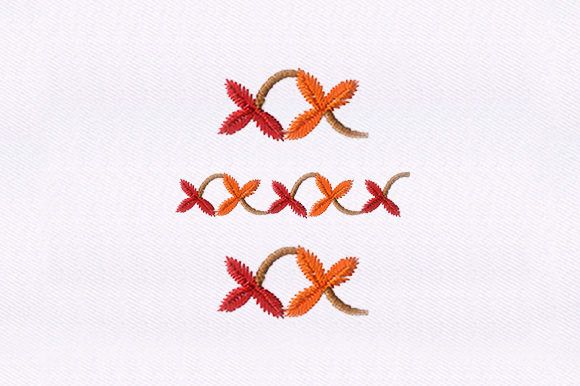
This embroidery file strikes a careful balance between decorative and minimal. It is not a heavy, dense floral that screams for attention. Instead, Leaves Border feels soft, elegant, and slightly rustic. The border structure gives it a farmhouse-friendly charm without tipping into overly cute or trendy. It reads as premium and thoughtful. The leaf motifs are spaced enough to breathe, which means the finished product looks more like a curated detail than a random fill. That first impression matters when you are trying to convince a customer that your handmade product is worth thirty dollars or more.
Tote Bags and Market Bags
Leaves Border is nearly perfect for a tote bag design. The border layout runs well along the bottom edge or near the top hem. I stitched a sample on a natural canvas tote and the design sat beautifully against the fabric texture. The open spacing between leaves kept the tote from feeling stiff, and the stitch density was manageable even on medium-weight cotton. For a craft fair product, this is the kind of machine embroidery design that makes a shopper stop and touch the bag. I recommend placing it horizontally across the lower third of the bag for a balanced look that photographs well for Etsy listings.
Apron Embroidery
Aprons are a staple at handmade markets, and Leaves Border works as both a chest pocket accent and a waistband detail. I stitched a version along the lower edge of a half-apron and the result looked intentional and professional. The border does not overpower the garment, which is important for aprons that need to remain functional. If you are an Etsy seller producing aprons in batches, this design repeats cleanly and consistently across units. The thread colors I chose were a muted sage green and a warm cream, but the design would also hold up well in a single color for a more minimal look.
Tea Towel Embroidery
Tea towels are one of the easiest products to sell at a craft fair because they are low-cost, giftable, and easy to display. Leaves Border stitched smoothly on linen-blend tea towels. The design did not pucker or distort, which can happen with dense designs on lightweight towels. The border length fit well within a standard 5x7 hoop, and the leaves did not lose clarity at the smaller scale. For a booth display, I hung three towels with different thread colors to show the versatility of the design. Customers responded well to the subtle elegance. If you are looking for a tea towel embroidery that feels elevated but not fussy, this is a strong choice.
Embroidered Patches
Patches are a great way to test a design before committing to larger products. I stitched Leaves Border as a standalone patch on twill fabric and the border shape worked well as a decorative strip. The stitch density was firm enough to hold the shape without being stiff. For a craft fair product, patches offer a low-price entry point for customers who might come back later for a tote or apron. Leaves Border as a patch reads as handmade and intentional, not like a generic iron-on. I would recommend backing it with a heat-seal adhesive for easy application.
Caps and Small Pouches
Curved surfaces like caps can be tricky for any machine embroidery design. Leaves Border, with its open structure and moderate stitch count, handled the curve of a cap front better than I expected. I did test it on scrap fabric first to confirm the registration and tension. On a cap, the border works best as a short strip along the front panel. For small fabric pouches, the design fits nicely as a centered accent. The border does not wrap around corners well, so keep it on flat or gently curved areas. Pouches with Leaves Border sold quickly at my booth, especially in neutral and earth tone fabrics.
Pillow Covers and Home Decor
Pillow covers are a higher-ticket item at a handmade market, and Leaves Border adds a decorative touch that feels custom without being overwhelming. I stitched the border along one edge of a linen pillow cover and the result looked like a boutique home decor item. The design photographs well for online listings because the leaf shapes are distinct and the spacing is clean. If you are a digital seller offering printable mockups, this machine embroidery design translates well to staged photos. The visual appeal is strong enough to justify a premium price.
Selling and Production Points for Craft Fair Products
Leaves Border is easy to understand at a glance. A customer walking past your booth can immediately see that it is a leaf border, and that clarity helps drive interest. The design works as both a small accent and a larger focal element depending on placement. I tested it at full size in a 5x7 hoop and it felt substantial but not heavy. For smaller products like pouches or caps, the border can be scaled down slightly, but I recommend testing the stitch density at reduced sizes because some leaf details may lose definition below a certain threshold.
For batch production, Leaves Border is a repeatable design. The file formats included in the machine embroidery design package are comprehensive, covering 10O, ART, CND, DSB, DST, DSZ, EXP, HUS, JEF, PCS, PEC, PES, TAP, VIP, VP3, and XXX. This wide compatibility means you can load the embroidery file onto most commercial and home machines without conversion issues. That saves time when you are producing multiple units for a craft fair. I always check the stitch count and thread colors before starting a batch, and I recommend you do the same to confirm the design fits your production workflow.
Careful-Use Notes for Leaves Border
No design is perfect for every surface, and Leaves Border has a few considerations worth noting. The leaf shapes are open and well-spaced, which helps avoid dense stitch areas that can cause puckering on lightweight fabrics. However, if you stitch the border on thick fabric like heavy canvas or denim, you may need to adjust the tension and use a heavier stabilizer. I recommend a tear-away stabilizer for most cotton and linen blends, and a cut-away stabilizer for stretchy or textured fabrics.
Tiny details in the leaf outlines can lose clarity if you scale the design down too far. I tested it at 70% of the original size on a cap and the leaves still read well, but at 50% the finer points began to blur. If you plan to use Leaves Border on very small products, stitch a test sample first on scrap fabric. Dark fabric is another consideration. The border relies on clean shapes and moderate contrast, so light or bright thread colors on dark fabric work well. Dark thread on dark fabric may cause the leaves to blend together. Check your thread contrast against the fabric before committing to a production run.
Textured towels, especially those with a looped terry weave, can trap thread and distort the design. I tested Leaves Border on a thick towel and the result was acceptable, but I did increase the upper thread tension slightly and used a water-soluble topping to prevent the stitches from sinking into the loops. Curved cap surfaces also require careful hooping and a firm stabilizer to keep the design from shifting. Always test on a scrap cap before stitching a final product.
Visual Appeal, Customer Attention, and Booth Display Strength
Leaves Border has a natural, calming visual appeal that fits well with the farmhouse, botanical, and rustic aesthetics that are popular at craft fairs. The design does not scream for attention, but it draws the eye through its balanced spacing and graceful leaf shapes. In a booth setting, I placed a tote bag with Leaves Border at eye level and it consistently stopped shoppers. The design looks handmade without looking amateur, and that distinction is critical for building brand trust.
For booth display, I recommend creating at least one real mockup of the design on a finished product. A physical sample lets customers see the stitch quality, feel the fabric, and imagine the product in their own home. Printable mockups are useful for online listings, but nothing replaces a real sample at a craft fair. Leaves Border photographs well because the leaf shapes are distinct and the border structure creates a clear focal point. For Etsy sellers, this design will produce clean, attractive listing photos that highlight the embroidery detail.
The design also contributes to product value. A tote bag or apron with a decorative border feels more intentional than a plain item, and customers are willing to pay a premium for that perceived quality. Leaves Border adds a handmade touch without requiring excessive stitching time, which is important for maintaining a profitable price point. I found that the design took roughly the same time to stitch as a moderate-density fill, but the visual result looked more detailed and custom.
Practical Embroidery Designer Notes
Before you start production with Leaves Border, I recommend a few practical steps. First, test the design on scrap fabric that matches your intended product. Check the stitch density, thread tension, and overall registration. Second, review the thread colors against your fabric choices. The design works well with two or three colors, but a single color can also be effective for a more minimalist look. Third, confirm the hoop size required for the design at your intended placement. The border format means the width may be longer than the height, so plan your hooping accordingly.
Use the right stabilizer for your fabric type. For medium-weight cotton and linen, a tear-away stabilizer is usually sufficient. For stretchy fabrics, knits, or caps, a cut-away stabilizer provides better support. If you are stitching on textured towels, use a water-soluble topper to keep the stitches crisp. I also recommend checking the design for any overly dense areas that could cause needle breakage or thread shredding. Leaves Border is reasonably well-balanced, but every machine handles designs differently, so a test stitch is always worth the time.
Create at least one real mockup of the finished product before your craft fair. This gives you a chance to see how the design interacts with the fabric, how it holds up after handling, and how it photographs. If you are selling finished products, also confirm that your commercial licensing for the machine embroidery design allows you to sell items made from it. The file format list includes most major formats, which is convenient, but licensing terms are separate from file compatibility. Always check the license agreement before listing your finished products on Etsy or at a market.
For batch production, I recommend stitching a small run first to confirm consistency across multiple units. Leaves Border repeats well, but slight variations in hooping or fabric tension can affect placement. Once you have a reliable setup, you can scale up with confidence. The design’s moderate stitch density and clean structure make it suitable for production work without excessive machine wear.
Final Thoughts on Leaves Border for Your Handmade Product Line
Leaves Border is a versatile, well-structured machine embroidery design that fits naturally into a craft fair product lineup. It performs well on tote bags, aprons, tea towels, patches, caps, pouches, and pillow covers. The visual appeal is elegant and approachable, and the design photographs well for online listings. From a production standpoint, the stitch density is manageable, the file format compatibility is broad, and the design repeats cleanly for batch work. With careful attention to fabric choice, stabilizer selection, and thread contrast, Leaves Border can become a reliable design asset in your embroidery business. Whether you are a seasoned Etsy seller or a new shop owner building your first booth, this floral border offers a strong return on the time you invest in stitching it.