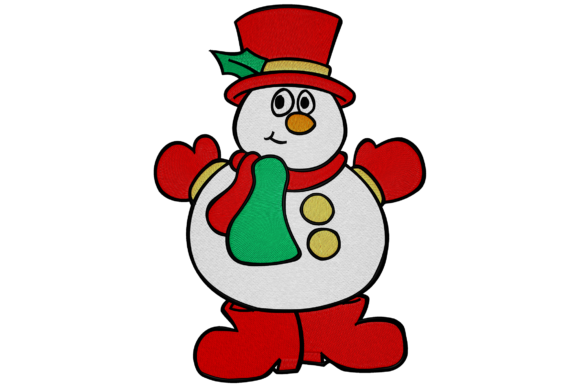
Happy Snowman: A Designer's Review for Branded Merchandise
When I first opened the Happy Snowman embroidery file, I was looking for a design that could do double duty: feel festive enough for seasonal merchandise but polished enough for a small business to use on branded patches, staff apparel, and promo items. After testing it across several real-world applications, I can offer a thorough review from the perspective of an embroidery designer who works with small business merch daily. This design, available in five sizes and hand-digitized for machine embroidery, has genuine potential for commercial use, but it also comes with important considerations before you stitch it into your custom apparel lineup.
First Impressions: A Design That Balances Warmth and Professionalism
The Happy Snowman design immediately reads as friendly and approachable, which is its biggest strength for business use. The hand-digitized quality gives it a slightly organic feel, not overly stiff or mechanical. For a café, bakery, florist, or creative studio looking to add a seasonal touch to their brand identity, this design can convey warmth without sacrificing professionalism. The fact that it is offered in five sizes is a major advantage for commercial embroidery projects, because you can scale it from a small chest logo accent on a work shirt to a larger focal point on a tote bag or apron.
From a visual personality standpoint, Happy Snowman leans toward rustic and playful rather than ultra-modern or minimalist. That is not a flaw, but it does mean the design will pair best with businesses that already have a friendly, handmade, or community-focused brand voice. A boutique bakery or a local pet brand could use this effectively, while a high-end corporate retailer might find it too casual. The design feels like it belongs on handmade product packaging, staff uniforms, and customer gifts rather than on formal business attire.
Putting Happy Snowman to Work in Small Business Merchandise
I tested Happy Snowman across several real scenarios that small business owners, embroidery shops, and Etsy sellers would consider. Here is how it performed in each application:
- Embroidered patches: This is where the design shines. The hand-digitized stitching translates well to patch form, especially for embroidered patch production on twill or felt. The five size options mean you can produce a small patch for caps or a larger patch for the back of a denim jacket. The design holds its detail well at middle to large sizes, but I recommend testing the smallest size on a sample patch before committing to a production run.
- Staff uniforms and aprons: For a café or bakery, an apron embroidery placement on the chest or lower pocket works beautifully. The happy snowman motif is visible without being overwhelming. The design reads clearly from a conversational distance, which is important for brand identity on staff apparel. I would place it on a left chest position for consistency.
- Cap embroidery: This is a trickier application. The design has moderate detail, and on a curved cap front, you need to ensure the stitch density is not too high for the curve. The smallest size might work on a structured cap, but I would avoid placing it on unstructured or mesh caps where the fabric cannot support the stitching well.
- Tote bag design: A large version of Happy Snowman on a cotton tote bag is a strong tote bag design option for retail merchandise or customer gifts. The design feels natural on a canvas tote, and the friendly motif aligns with eco-conscious or handmade branding. The fabric texture of a tote bag actually complements the rustic feel of the digitized file.
- Product packaging accents: For businesses that sell physical goods, an embroidered patch or label featuring this design can be sewn onto packaging, tags, or reusable bags. This adds a tactile, handmade product touch that customers appreciate and remember.
Where to Exercise Caution with This Design
No design is perfect for every application, and Happy Snowman has a few areas where commercial embroidery users should be careful:
- Small patch sizes: The smallest size available may cause some of the finer details, such as the eyes, smile, or hat brim, to become muddled. Stitch density can become an issue if the design is scaled down too aggressively. Always test the smallest size on scrap fabric before stitching it onto a finished product.
- Curved surfaces: As mentioned with caps, any curved surface like a sleeve cuff, collar, or rounded patch edge can distort the design if the hoop size does not match or if the stabilizer is not adequate. I recommend using a cutaway stabilizer for curved applications to maintain shape.
- High stitch density areas: The hand-digitized nature of this file means some areas may have tighter stitch paths than others. This is common with designs that are not auto-digitized. Check the stitch count and density map before production. If you see areas where threads are too close together, consider reducing density slightly or using a larger needle to prevent thread breakage.
- Dark uniforms: If your business uses dark-colored uniforms, such as black or navy aprons, the thread colors in the design need to be reviewed carefully. The snowman itself is white, which will pop well on dark fabric, but any light or pastel accent colors may not show up as intended. Reverse the design or adjust the color palette to maintain contrast.
- Frequent washing: Items like aprons, work shirts, and tote bags that undergo repeated washing need a durable stitch structure. The design should be tested on a sample garment through at least five wash cycles to ensure no shrinkage, distortion, or thread fraying occurs. Use a quality stabilizer designed for frequent laundering.
How Happy Snowman Shapes Brand Identity and Customer Trust
When you add an embroidered design to your merchandise, you are making a statement about your brand. Happy Snowman communicates approachability, seasonal relevance, and a touch of handmade charm. For a small business, especially one in the food, gift, or lifestyle space, this design can strengthen brand identity by creating a consistent visual cue across multiple products. Customers who see the snowman on a staff apron, a tote bag, and a product label will begin to associate that warmth with your business.
However, brand identity also requires consistency. If you use this design, it should appear in the same color palette and placement across all your design assets. I recommend creating a printable mockup for client approval before production, so you can see how the design will look on each item. A mockup also helps you evaluate whether the design fits within your existing visual system. If your brand is minimalist and modern, this design might feel out of place. But if your brand is friendly, craft-focused, or community-oriented, it will reinforce the trust and recognition you have built.
Customer trust is also tied to the quality of the finished product. A well-digitized embroidery file like this one, when properly stitched with the right thread colors, hoop size, and stabilizer, will look professional and durable. Poor stitching, on the other hand, can damage your brand's reputation. The hand-digitized nature of Happy Snowman gives it a higher quality baseline than auto-digitized designs, but it still requires careful setup to achieve the best results.
Practical Embroidery Designer Notes for Production
As an experienced embroidery designer, I always recommend a few steps before committing a design to production. Here are my notes for Happy Snowman:
- Test it in black and white first: Before you commit to thread colors, stitch the design in black thread on white fabric or white thread on black fabric. This will show you the true stitch path density and reveal any areas where the design may be too tight or too loose. It is a quick way to catch problems before they affect your production run.
- Check if it works at small patch size: The smallest of the five sizes should be tested on a sample patch. Use a cutaway stabilizer and a 75/11 needle for best results. If the details are lost, consider using the next size up or simplifying the design slightly.
- Review thread color contrast: The snowman's white body and dark hat create natural contrast, but if you are stitching on a colored fabric, adjust the palette to ensure visibility. For example, on a red apron, the white snowman will pop, but the hat and scarf might need to be a darker shade to stand out from the red.
- Inspect spacing: Hand-digitized designs sometimes have uneven spacing between elements. Look at the gap between the snowman's body and his hat, as well as the spacing around the arms and face. Adjust if necessary to maintain a clean silhouette.
- Confirm hoop size: The five sizes available will fit different hoop dimensions. Make sure you have the correct hoop for the size you choose. A hoop that is too small will cause the fabric to pucker, while a hoop that is too large may allow the fabric to shift during stitching.
- Test on real fabric: Never rely solely on a digital preview. Stitch the design on the exact fabric you plan to use for your merchandise. Fabric texture affects stitch quality significantly. A smooth cotton will behave differently than a textured canvas or a fleece sweatshirt.
- Use proper stabilizer: For most applications, a medium-weight cutaway stabilizer is recommended. For stretchy fabrics like t-shirts or sweatshirts, use a tear-away stabilizer with a topping layer to prevent the stitches from sinking into the fabric.
- Create a mockup for client approval: If you are producing this design for a client, create a printable mockup showing the design on the actual product. This avoids misunderstandings and ensures the client sees exactly what they will receive.
- Compare it beside other design assets: If your business already uses other embroidery designs or logos, stitch Happy Snowman next to them on a sample to see if the visual style is consistent. Disparity between designs can confuse customers and weaken your brand.
- Confirm commercial licensing before business use: The product description states that this is a digital file for embroidery, but it does not explicitly mention commercial licensing terms. Before you use this design for commercial embroidery on merchandise you sell, confirm with the seller that you have the right to use it for business purposes. Many digital embroidery files are for personal use only unless stated otherwise.
Final Verdict for Commercial Embroidery Use
Happy Snowman is a solid choice for small businesses that want to add a seasonal, friendly touch to their merchandise, patches, and staff apparel. The hand-digitized quality and five size options make it versatile for machine embroidery design projects ranging from small patches to large tote bag motifs. It performs best on flat or gently curved surfaces and on fabrics that support moderate stitch density. With careful testing, proper stabilizer use, and attention to detail, this design can become a valuable part of your small business merch lineup.
For embroidery shops, Etsy sellers, and apparel decorators, I recommend adding this file to your seasonal collection, but always test the smallest size and the specific fabric you plan to use before going into full production. The design's friendly personality aligns well with cafés, bakeries, florists, pet brands, and handmade shops, but it may not suit more formal or minimalist brands. As with any digital embroidery file, the finished product is only as good as the setup behind it. With the right approach, Happy Snowman can help your business create memorable, professional merchandise that customers will love to wear and use.