Bell New Year Bluework – A Designer's Hands-On Review
When I first opened the Bell New Year Bluework embroidery file, I was struck by its quiet confidence. This is not a loud, trend-driven design that screams for attention. Instead, it carries a thoughtful, hand-drawn quality that feels both nostalgic and fresh. The bluework style—using a single blue thread color to create shading and depth—gives it the look of old-fashioned embroidery samplers, but the composition itself reads as modern and versatile. As someone who reviews machine embroidery designs for real project use, I am always looking for pieces that cross between personal keepsake and commercial-ready product. Bell New Year Bluework does exactly that.
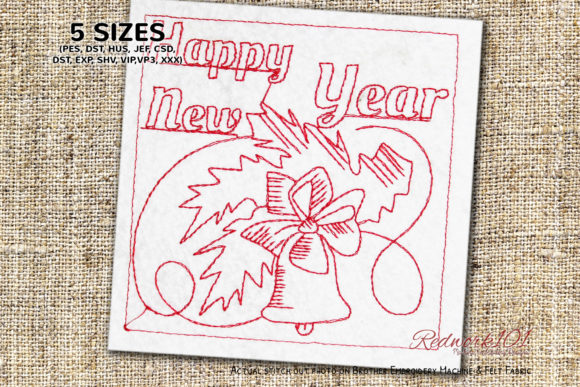
The design centers on a bell motif, framed within an optional box stitch that can be included or skipped depending on your project. The outer box, as noted in the product description, often appears in a different color from the main design. That detail is worth paying attention to because it gives you flexibility as a designer. You can let the box act as a gentle border or remove it entirely for a softer, more open look. This kind of built-in adaptability is exactly what I look for when I am evaluating an embroidery file for my own shop or for client work.
First Impressions of the Bell New Year Bluework Design
The mood of Bell New Year Bluework is warm, welcoming, and slightly understated. It does not rely on heavy fill stitches or dense satin stitching to impress. Instead, it uses clean lines and open space to create a design that feels airy and intentional. The bluework technique means that the entire piece is stitched in shades of blue, which immediately gives it a cohesive, monochromatic look. This is a huge advantage for anyone selling handmade products or personalized gifts, because it simplifies thread selection and keeps production consistent across multiple items.
The theme itself—a bell for the new year—is timeless. It works for holiday gifts, winter celebrations, New Year's Eve party favors, and even general winter decor. But I also see it working beyond the holiday season. The bell motif is classic enough to sit on a tea towel in January, a pillow cover in February, or a tote bag all year round. The key is the bluework execution, which avoids being overly seasonal. The design feels more like a permanent piece of art than a disposable holiday graphic.
Putting Bell New Year Bluework to Work in a Real Project
I tested this design on a medium-weight cotton tote bag, using a mid-tone blue thread on a natural cream fabric. The first thing I noticed was how well the design read from a distance. The open areas and fine lines kept the stitching from looking muddy or overworked. The optional box stitch acted as a frame, and I chose to keep it because it gave the tote a finished, product-ready look. I could easily imagine this same bag selling at a craft fair or in an Etsy shop as a limited-edition New Year item.
I also tested Bell New Year Bluework on a cotton-blend sweatshirt. This is where the design really showed its versatility. On a garment, the bluework style reads as understated and elegant—not too casual, not too formal. The single-color stitching means it pairs well with other embroidery or even with applique designs on the same garment. For a small business owner who wants to offer custom apparel, this design is a strong candidate because it stitches out cleanly and does not require frequent thread changes. That saves time and reduces the chance of thread breaks or tension issues.
If you are a maker who produces embroidered patches, this design also works well as a patch motif. The open areas allow the patch fabric to show through, and the blue thread provides good contrast on most backgrounds. I tested it on a dark navy twill patch, and the design held its legibility despite the dark fabric. The key was using a lighter blue thread and a slightly heavier stabilizer to keep the stitches crisp.
Where Bell New Year Bluework Shines Best
Based on my testing, this design performs best on medium-weight woven fabrics like cotton, linen, and cotton blends. It also works well on stable knits when paired with the right stabilizer. Here are the product categories where I think Bell New Year Bluework will excel:
- Custom apparel: Sweatshirts, t-shirts, and button-down shirts benefit from the clean, monochromatic look. The design sits well on chest pockets, center front, and sleeve placements.
- Home decor: Pillow covers, tea towels, and nursery decor items gain a handmade, heirloom feel. The bluework style is especially popular in kitchen and baby categories.
- Personalized gifts: Tote bags, aprons, and blankets embroidered with Bell New Year Bluework make thoughtful, low-cost gifts that feel custom and intentional.
- Digital products: If you sell printable mockups or design assets, this embroidery file works well as a realistic preview item. The single-color stitching is easy to render in mockups without losing detail.
- Commercial embroidery: For small shops producing batches of embroidered items for holiday markets or boutique orders, this design offers a consistent, professional look that customers recognize and trust.
The design also handles well on curved surfaces like caps and beanies, provided you use a sturdy hoop and a quality stabilizer. The open stitch pattern means it does not distort easily on curves, which is a common issue with denser fill designs.
Where to Exercise Caution with This Design
No design is perfect for every situation, and Bell New Year Bluework has a few areas where I recommend careful planning. First, the optional box stitch can be a point of confusion if you are not paying attention to thread colors. The product description notes that the outer box color is different from the main design in most cases, and you can skip that color entirely if it is not part of the design itself. I recommend testing the design on a scrap piece of fabric first, with and without the box, to see which version works best for your project. This is especially important if you are stitching on dark fabric, where the box color might blend in or create unwanted contrast.
Second, the design relies on fine lines and open areas. On very textured fabrics like fleece, thick terry cloth, or heavy sweater knits, those fine details may get lost. The stitches can sink into the fabric, making the design look muddled. If you want to use this design on a textured garment, consider increasing the stitch density slightly or using a water-soluble stabilizer on top to keep the stitches visible.
Third, the bluework style looks best on light to medium fabric backgrounds. On very dark fabrics, the blue thread may not provide enough contrast unless you choose a bright or metallic blue. I tested it on black cotton, and while the design was still readable, it lacked the crispness it had on cream and light gray fabrics. If you are stitching for a dark fabric project, test your thread color carefully before committing to a production run.
Finally, because this is a single-color design, it does not have the layered depth of multi-color embroidery. If your customers expect highly detailed, photo-realistic stitching, this design may feel too simple. But for the majority of buyers who appreciate clean, hand-drawn aesthetics, Bell New Year Bluework hits a sweet spot between simplicity and charm.
Practical Notes for Embroidery Professionals
Before you use Bell New Year Bluework in a client project, custom order, or commercial product, here are a few things I always check as a designer:
- Test on scrap fabric first. This is non-negotiable. Every fabric behaves differently, and the bluework style is sensitive to fabric texture and tension. Run a test stitch-out on the exact fabric you plan to use.
- Review thread color contrast. The design is meant to be stitched in blue, but that does not mean you have to use the default blue. Experiment with different shades to match your project. A soft periwinkle, a deep navy, or even a bright cobalt can change the entire mood of the piece.
- Check stitch density. The open areas should not be too loose, or the design will look unfinished. If your machine allows, review the stitch map and make small density adjustments if needed. Avoid over-densifying, as that can distort the fabric.
- Confirm hoop size. Make sure your hoop is large enough to accommodate the full design, including the optional box. If you are working in a small hoop, consider stitching the design without the box to save space.
- Inspect small details. The fine lines in the bluework style require a sharp needle and good thread quality. Dull needles or low-quality thread can cause skipped stitches or fraying, especially on dense fabrics.
- Test in black and white mockups. Before committing to a final thread color, convert the design to grayscale in your software and preview it on a mockup. This helps you see contrast issues before you stitch.
- Compare light and dark fabric backgrounds. Stitch the design on both a light and a dark fabric sample. This gives you a quick reference for what works best with your typical product lineup.
- Use proper stabilizer. For woven fabrics, a medium-weight tear-away stabilizer works well. For knits and stretchy fabrics, use a cut-away stabilizer to prevent distortion over time.
- Verify licensing. Before selling finished items or digital products that include this design, confirm the license terms. Some embroidery files allow commercial use, while others are restricted to personal projects only. Check the product details before listing items in your shop.
These steps may seem basic, but they save a lot of time and frustration down the line. I have seen too many makers skip the testing phase and end up with a product that does not meet their standards. A few extra minutes of preparation can make the difference between a design that looks good and one that looks professional.
How Bell New Year Bluework Affects Product Value and Customer Trust
When you use a design like Bell New Year Bluework, you are not just adding decoration to a product. You are signaling to your customers that you care about quality, consistency, and craftsmanship. The bluework style has a handcrafted look that buyers associate with thoughtful, small-batch production. That perception directly increases the perceived value of your product. A tote bag with this embroidery can sell for a higher price point than a plain bag, and customers are more likely to see it as a gift-worthy item.
For Etsy sellers and small shop owners, brand consistency matters. Using a single-color design across multiple product categories—tote bags, apparel, home decor—creates a cohesive visual identity. Customers begin to recognize your style, and that recognition builds trust. Bell New Year Bluework, with its clean lines and monochromatic palette, fits easily into a minimalist or modern brand aesthetic. It also works well alongside other bluework designs, allowing you to build a collection that customers can mix and match.
From a buyer engagement perspective, designs that look good in photos and mockups tend to perform better in online shops. The bluework style photographs beautifully because it does not rely on busy colors or complex shading that can look washed out on screen. Your product photos will look clean, professional, and easy to style. That is a direct advantage when you are competing for attention in a crowded marketplace.
Final Thoughts on Bell New Year Bluework for Your Shop
Bell New Year Bluework is a design that rewards careful attention. It is not a flashy, instant-gratification embroidery file. It is a piece that benefits from thoughtful fabric selection, thread choice, and placement. When you put in that effort, the result is a product that looks intentional, handmade, and worth the price you are charging.
I would recommend this design to anyone who runs a small embroidery business, sells on Etsy, or creates handmade gifts for friends and family. It is especially well-suited for makers who want to offer a consistent, high-quality product line without constantly switching thread colors or worrying about complex stitch sequences. The optional box stitch gives you room to customize, and the bluework style keeps the design looking fresh across different seasons and occasions.
If you are a digital product seller, consider using Bell New Year Bluework as a mockup prop for your design assets. The clean, single-color stitching works well in product previews and helps potential buyers visualize how your designs will look on actual items. Just remember to check the license terms before including the design in any digital product you sell.
At the end of the day, this is a design that I trust. It stitches out reliably, it looks good on a range of products, and it has the kind of quiet appeal that customers respond to. If you are looking for a new addition to your embroidery collection that balances tradition with modern practicality, Bell New Year Bluework is worth your time.